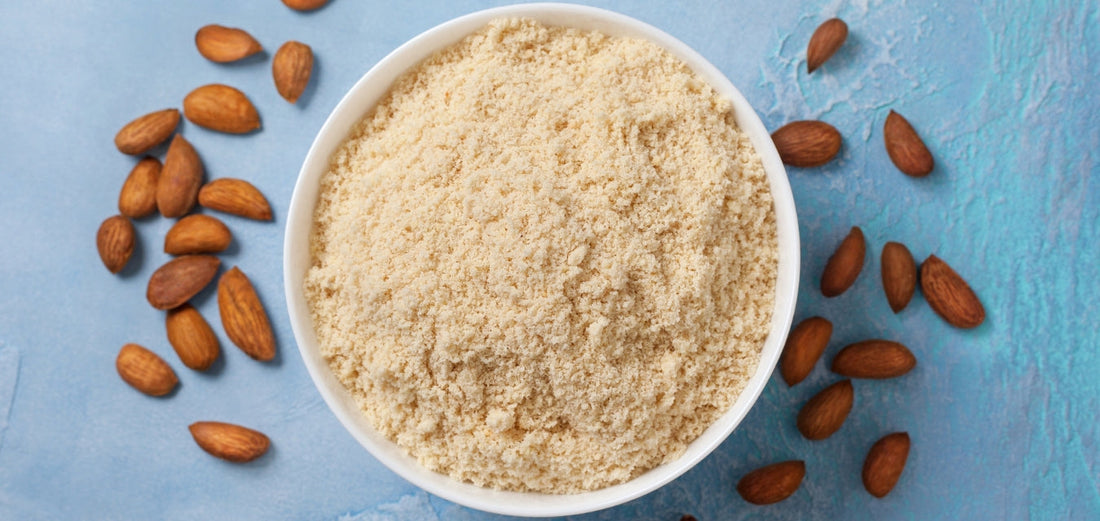
Almond flour vs. ground almonds – these two terms are often used interchangeably, but there are crucial differences. Both serve as gluten-free alternatives to wheat flour, but they differ in production, consistency, and uses. In this post, you'll learn about these differences and which product is better suited for your recipe.
Almond flour is made from blanched almonds, from which the brown skin has been removed. The almonds are then defatted, resulting in a finer, lighter flour. Due to the pressing for oil extraction, almond flour contains less fat and is drier than ground almonds.
Ground almonds consist of whole almonds that are finely ground, either with or without their skin. They are not defatted, which is why they have a higher fat content and a coarser consistency than almond flour.
Almond Flour: Finer and drier, making it particularly suitable for delicate baked goods such as cakes, cookies, or macarons. Due to its lower fat content, it absorbs more liquid and affects the dough's consistency.
Ground Almonds: Coarser and moister, which makes them ideal for moist cakes, bread, or as a breadcrumb substitute. They bind less liquid and result in a slightly denser consistency.

For fluffy cakes, cookies, or delicate pastries: Almond flour is the better choice, as it results in a lighter consistency.
For moist cakes, bread, or as a substitute for breadcrumbs: Ground almonds are ideal, as they contain more moisture.
When replacing wheat flour: Almond flour binds more liquid, so the amount of liquid in the recipe should be adjusted.
Almond flour vs. ground almonds – the choice depends on the specific recipe. While almond flour is suitable for delicate baked goods, ground almonds lend a moister consistency to cakes and bread. Both are a great alternative to wheat flour and offer a healthy, gluten-free option for various dishes.
Have you already had experience with almond flour vs. ground almonds? Share your tips and favorite recipes in the comments! 😊
Apfelessig ist seit Jahren ein fester Bestandteil in vielen Haushalten. Ob in der Küche, für die tägliche Routine oder als vielseitiger Helfer im Alltag – die Einsatzmöglichkeiten sind breit gefächert....
Mandelmehl ersetzt Weizenmehl nicht einfach 1:1 – aber mit den richtigen Tipps gelingt es mühelos. Erfahre alles zur richtigen Umrechnung, Anwendung und zum Backen mit Mandelmehl.
Jojobaöl gehört zu den langlebigsten Naturölen – doch warum eigentlich? In diesem Artikel erfährst du, was Jojobaöl so besonders macht und wie du seine Haltbarkeit optimal erhältst. Plus: praktische Tipps...
Natürliche Süßungsmittel sind gefragter denn je. Doch welche Unterschiede gibt es zwischen Kokosblütenzucker, Honig und Agavendicksaft? Dieser Vergleich zeigt, wie du die passenden Zuckeralternativen für deine Küche findest.