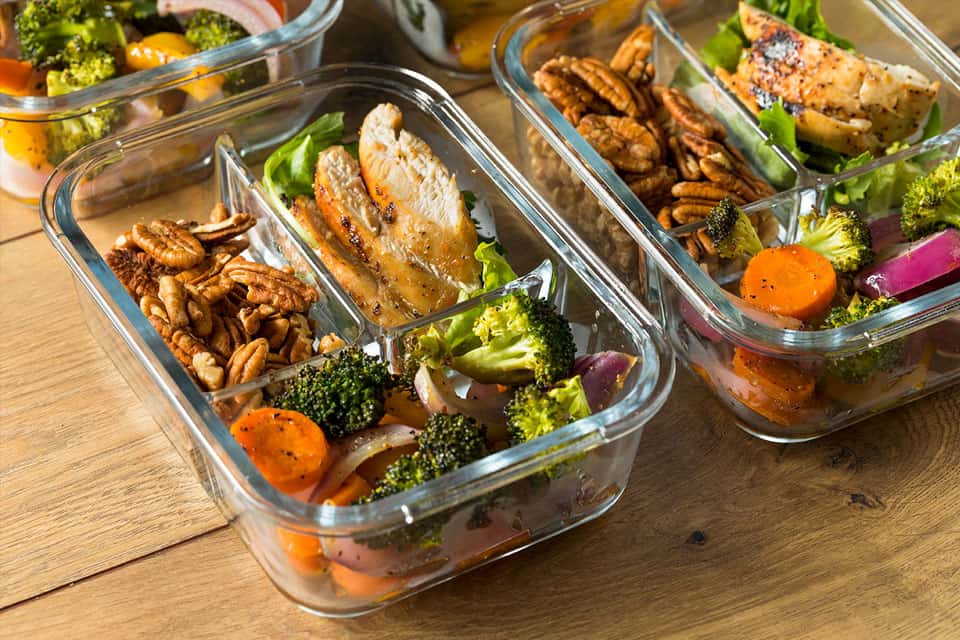
Meal prep is short for "meal preparation". Simply put, it means preparing food in advance. This means food is pre-cooked for one or more days.
Meal prep helps you save money and time, and with the correct choice of ingredients, it can support a balanced diet. Daily cooking and shopping are eliminated, giving you more time. Those who plan well also avoid buying unnecessary foods that gather dust in the pantry or are unhealthy.
Ideally, the dishes should contain all kinds of vegetables and protein sources such as meat, fish, tofu or legumes, and filling side dishes like rice, quinoa, potatoes or pasta. With meal prep, you don't have to eat the same dish every day. You can also re-combine ingredients for your different dishes. You can also prepare healthy snacks for in-between meals during meal prep. Energy balls or homemade muesli bars are suitable for this, for example.
If you want to pre-cook your food, you naturally need containers for storage and possibly for transport. You can simply use plastic or glass boxes with lids, which ideally are directly microwave-safe. Empty jam and screw-top jars are wonderfully suitable for transporting dressings or soups. This gives them a second life and they are reused.
It doesn't matter whether you only want to prepare food for your lunch break or all meals of the day. Either way, proper planning makes pre-cooking easier. We are happy to offer you a few recipe ideas to get you started with your personal meal prep.
It's best to write yourself a shopping list so you don't forget anything when you shop and can easily get started with meal prep. You can find inspiration in the following recipes.
Honey Pecan Chicken with Avocado-Date Salad
Bee Sting Blueberry Semolina Pudding
Ricotta Pine Nut Muffins with Dried Tomatoes
Blueberry-Coconut Banana Bread
Coconut Quinoa with Zucchini Curry in a Jar
Cashew Cream Cheesecake with Blueberries
Im großen Hanfsamen Chia-Samen Flohsamen Vergleich erfahren Sie, wie sich die beliebten Samen und Flohsamenschalen hinsichtlich Geschmack, Farbe, Konsistenz, Quellverhalten und Bindeeigenschaften unterscheiden. Außerdem erhalten Sie praktische Tipps für Bowls,...
Ballaststoffe und ausreichend Flüssigkeit spielen beim Kochen, Backen und der Rezeptgestaltung eine wichtige Rolle. Viele ballaststoffreiche Zutaten nehmen unterschiedlich viel Wasser auf und beeinflussen dadurch Konsistenz, Quellzeit und Verarbeitung. In...
Wie viel Protein braucht man pro Tag? Der individuelle Proteinbedarf hängt von Alter, Körpergewicht und Lebenssituation ab. In diesem Ratgeber erfahren Sie, welche Proteinquellen sinnvoll sind, wie pflanzliches Protein in...
Ballaststoffe in Rezepten sind weit mehr als nur Bestandteile pflanzlicher Lebensmittel. Sie können die Struktur von Teigen beeinflussen, Flüssigkeit binden und für interessante Konsistenzen sorgen. Entdecken Sie, wie GreatVita Bio...